Ivory from sub-Saharan Africa was imported to the Land of Israel between 1600- 600 BCE, overcoming geopolitical changes in both arenas, a new study analyzing over 1,500 artifacts and fragments excavated at 46 sites in the region has shown.
“It was a very eventful millennium, but one thing remained constant, and that was the exchange of ivory, always [imported] from Africa,” said Dr. Harel Shochat from the University of Haifa, the lead author of the paper published in the November 2025 issue of the Journal of Archaeological Science.
According to Shochat, the study’s results are a testament to the existence of a southbound network of trade and exchanges consistent with some biblical narratives from the period, including the fabled story of the Queen of Sheba’s visit to King Solomon in Jerusalem, bringing opulent gifts. Sheba is considered by most scholars to correspond to modern-day Yemen. The research also points to robust international trade during the time of the Kingdom of Israel and Judah, when many scholars believed little commerce was conducted between far-flung areas.
Over the course of 1,000 years, the land of Israel transitioned from being fragmented into Canaanite city-states (first independent, then under Egyptian rule) in the Late Bronze Age, circa 1600-1200 BCE, to the establishment of the biblical kingdoms. At the end of the 8th century BCE, Israel was conquered and destroyed by the Assyrian empire, while Judah became a vassal state, before meeting the same fate at the hands of the Babylonians in 586 BCE. “The [ivory] network did not change despite all kinds of geopolitical fluctuations and changes in the social structure,” Shochat told The Times of Israel in a phone interview. “We show that we have a millennium-long kind of monopoly.”
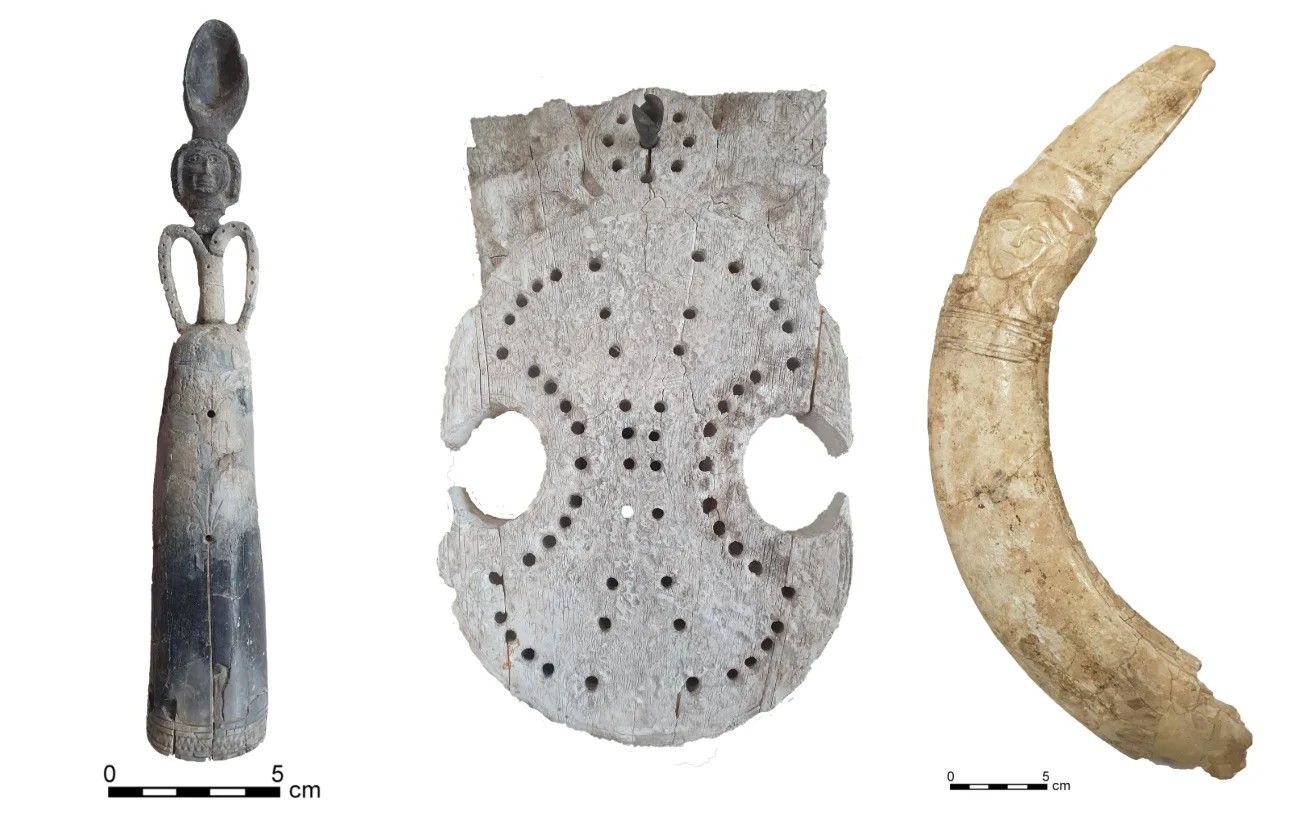
Ivory was used to craft different objects over the period. In the Canaanite city-states, items were found in cultic and royal contexts, and included luxurious artifacts such as cosmetic boxes, combs, and votive objects. Under Egyptian rule, ivory remained associated with the Canaanite elites. In the following centuries, ivory was used to manufacture everyday objects, such as spindles and dagger or knife handles. In the second half of the Iron Age, elaborate ivory carvings were inlaid to decorate furniture in important political centers.
Ivory’s prominence is also reflected in the Bible, which features the material in several narratives, referring to extreme opulence, such as King Solomon’s “large ivory throne” (I Kings 10:18), King Ahab’s palace adorned with ivory (1 Kings 22:39) and firebrand warnings from the prophet Amos to stop lolling on ivory-inlayed beds and couches (Amos 6:4).
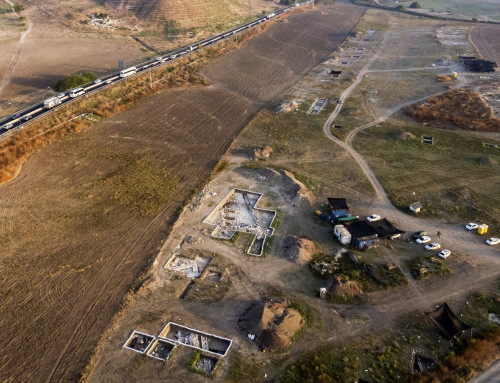
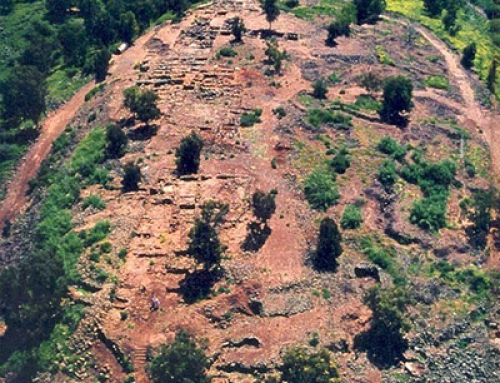
Several ivory fragments uncovered in a monumental building in Jerusalem’s City of David, dating between the 8th and 7th centuries BCE, were among the items analyzed for the study.
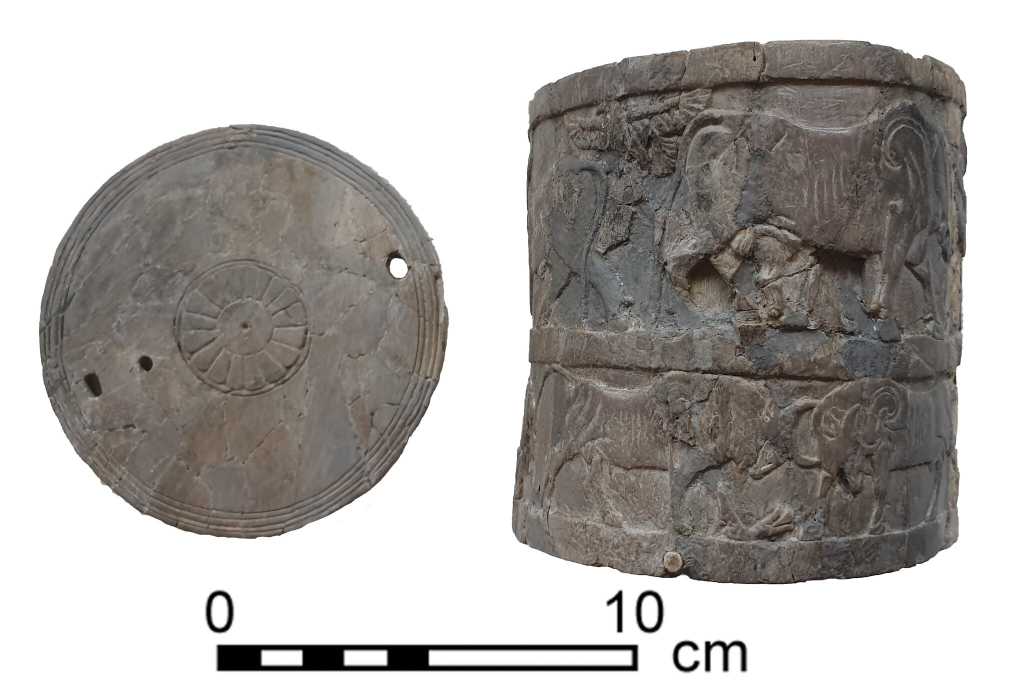
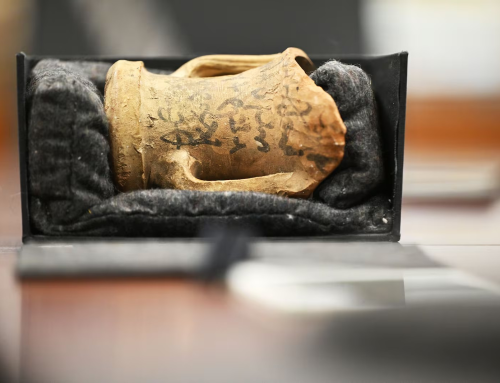
A one-piece ivory pyxis (cylindrical box) and its lid found at Tel Lachish. (Courtesy of the Israel Museum)
Biblical implications
Shochat explained that the results also have significant consequences in understanding biblical Israel. “In the archaeology of the biblical periods, whether the narrative that describes the events of King Solomon truly happened [is debated], and I am unable to solve the question with my study on ivories,” Shochat said. “However, what I can say is that the story of the Queen of Sheba and others mentioned in the Bible, such as the port in Ezion-Geber, point to a southbound exchange network in addition to the Mediterranean one, and we can attest that,” he added.
The book of I Kings recounts that Solomon built a fleet at Ezion-Geber on the Red Sea, in modern-day Eilat (I Kings 9:26). “The biblical author or editors were aware of this [southbound network],” the researcher said. According to the scholar, it is also evident that the kingdoms of Israel and Judah were core parts of international trade networks. “We do not address that in this paper, but we will in upcoming studies,” he said.
“Most textbooks will say that during the beginning of the Iron Age, a time of social turbulence when the biblical kingdoms arose, there was no foreign exchange, but we see that ivory kept on coming, and people kept on purchasing it,” Shochat said. “Interestingly, those people were merchants. The elites had collapsed, but we see the traders themselves using the ivories, maybe to show their own economic success.”
“Israel and Judah emphasized trade, also because of their unique location, connecting Egypt, Mesopotamia, and other regions, and not only on agriculture,” he added. “Foreign trade was a significant source of revenue.” Shochat stressed that the second-largest ivory assemblage found in the ancient Near East was excavated in Samaria, the ancient capital of the kingdom of Israel, located in today’s West Bank.
“I think this means a lot, and it echoes the biblical text about Ahab building an ivory house in his capital,” he said. At the same time, the new insights into the kingdom of Israel may offer additional perspectives on the polity compared to those stated in the Bible. “The Bible does not portray the kingdom of Israel very well,” Shochat noted. “It is the kingdom of sinners, with its kings and people sinning against God. Apart from the fact that there were people, kings, and palaces, we know a lot less about it compared to Judah. However, here we have the opportunity to learn about aspects [of Israel] that are often overlooked in historical texts. It is very interesting.”
Science meets ivory
According to Shochat, in the past, ivory items had been mostly researched in their artistry and significance, but scientific analysis of the artifacts was minimal. “In the last 30 years or so, there have been efforts to fight the illegal trafficking of modern ivory, and we thought it would be interesting to apply the same methods [to trace the origin] of modern ivories to ancient artifacts,” he said.
The researchers examined artifacts from various archaeological layers across the sites. Their goal was to determine both the type of animals the ivory came from and their geographical origin. “We developed a three-step protocol,” Shochat said. “First, we used a simple microscope with a magnification of up to 60 times to ensure the material was indeed ivory and not bone and to differentiate between hippo and elephant ivory,” he said.
The researchers found that approximately 85 percent of the artifacts were made of elephant ivory, and almost 15% were from hippopotamus (three items were crafted from boar tusks). In the second step, Shochat and the team worked to differentiate between ivory from African elephants and that from Asian elephants — an important distinction, as both species were considered possible sources of ivory for the region.
“We extracted organic material [from the artifacts] and conducted a molecular analysis based on proteomic identification,” Shochat said. Proteomic analysis studies the structure and function of proteins in an organism or biological material. The researchers focused on the collagen, the most abundant protein in osseous tissues, and identified the different amino acids (or protein molecule) sequences for each species. “This method is very useful in archaeology because it allows us to determine the species of small pieces of bone whose morphology is not distinguishable anymore,” Shochat said.
Elephants were already extinct in the areas comprising modern-day Israel during the time period considered in the study. In the past, however, some scholars suggested that Syrian elephants, a subspecies of the Asian elephant that still existed in Anatolia and Southwestern Asia at the time, could have been a source of the ivory trade in the region. Additionally, goods were imported to the region from the Indian subcontinent and other areas in Asia, where elephants were commonly found. The researchers determined that all the elephant ivory items analyzed in the study belonged to African elephants.
Finally, the team conducted isotopic analysis to discover the geographical origin of the animals. They considered isotopes, such as carbon and nitrogen isotopes, found in soil, vegetation, and water, which are absorbed by animals through their diet and encapsulated in their teeth or bones, providing a “fingerprint” of the locations where they resided.