The Utah State Board of Education is beginning the process of implementing a new law that updates how social studies and civics are taught in public schools, including guidance around teaching religious texts like the Bible.
House Bill 312, passed during the 2026 legislative session, outlines a list of historical documents and sources that may be incorporated into classroom instruction. The law specifies that religious texts should be taught for their historical and cultural significance, not as religious doctrine.
The bill does not mandate specific materials, instead allowing local school districts, known as local education agencies (LEAs), to determine how those sources are used in the classroom.
“It says that they may be included,” said John Arthur, Utah’s 2021 Teacher of the Year and a state lawmaker. “And just so everybody understands, they could already be included before.”
According to Arthur and other educators 2News spoke with, teaching about religion in public schools has always been permissible. Showing preference to one religion, preaching a set of beliefs as truth, or promoting religion could be considered a violation of the First Amendment.
Arthur said that while much of the attention on this law has focused on the religious aspects, the broader issue is a lack of a consistent social studies curriculum across the state.
“At the elementary level most, I would say, don’t have an established social studies curriculum to begin with,” he said, adding that many teachers are left to find materials on their own.
He said the bill could help address that gap by funding new resources.
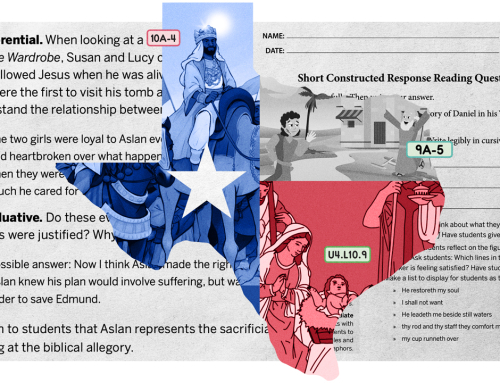
“What the bill ended up doing was providing millions of dollars to creating an open-source curricula that any teacher and any district throughout the state can access and that’s something, and it’s better than nothing,” Arthur said.
At the same time, he acknowledged concerns about how religious texts are highlighted in the law.
“What troubles me about the bill is that it does prioritize one faith tradition over another in terms of the amount of attention paid to the documents and historical record versus others that have been incredibly formative for the United States,” he said.
Supporters and some legal experts say the law aligns with existing constitutional boundaries, as long as instruction remains academic.
“As the court currently interprets the First Amendment, there’s no bar to a state or local government including instruction in school about religion or religious texts or religious practices,” said Matthew Brogden, senior director of the Center for Constitutional Studies at Utah Valley University.
Brogden said the distinction lies in how the material is taught and that they should be studied in relation to their impact on American history, civic thought and philosophy. Not as doctrine.
“Having students read the books of Moses or Prophets or the New Testament gospels if they’re studied as literature and history and not as devotional exercises, there’s no First Amendment problem,” he said.
He added that the law largely provides guidance rather than strict requirements.
“The bill itself says ‘may be included,’” Brogden said. “It uses [that language] whenever it describes the list because there’s an expectation that everything can’t be taught.”
But critics argue that even with that language, the law could blur the line between education and religious promotion, particularly for younger students.
“This is social studies, beginning at eight years old through high school,” said Patrick Elliott, legal director for the Freedom From Religion Foundation. “I think frankly, a lot of teachers aren’t going to be able to know where that line is.”
Elliott said the law may also put pressure on educators to make judgment calls about constitutionality in real time.
“We don’t think teachers should ever be put in that spot,” he said.
He added that mistakes in the classroom could carry legal consequences.
“If a teacher violates students’ constitutional rights, they can be sued they can be held legally responsible,” Elliott said.
Arthur said how the law ultimately plays out will depend heavily on local decisions, and the daily constraints teachers face in the classroom, especially when it comes to teaching history and civics.
“This is still a law dependent upon teachers delivering instructions and teachers who are empowered within districts to make decisions about what they are and are not going to teach within their classrooms,” Arthur said. “Not enough time is dedicated to social studies and there isn’t enough time to teach all of the standards. You’re going to have individual districts and schools and teachers prioritizing one standard over another and one document over another.”
He said that makes local conversations about curriculum critical moving forward.
“This is a conversation that really needs to be had at the local level,” Arthur said.
The law is not set to be fully implemented until the 2028–2029 school year, giving the state and local districts time to develop curriculum and guidance.
In the meantime, the State Board of Education is working to translate the legislation into classroom standards and said they expect it to take at least ten months to implement all of the education-related bills passed in this year’s legislative session.
Original Article – New law includes guidance on teaching religious texts, like Bible, in Utah public schools