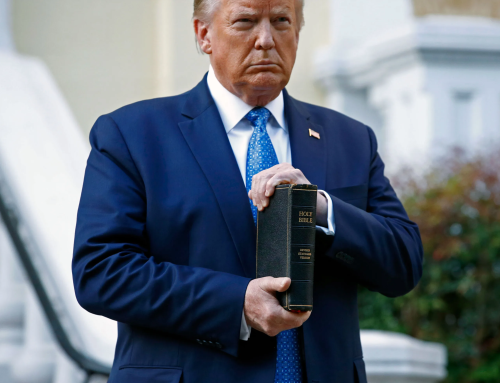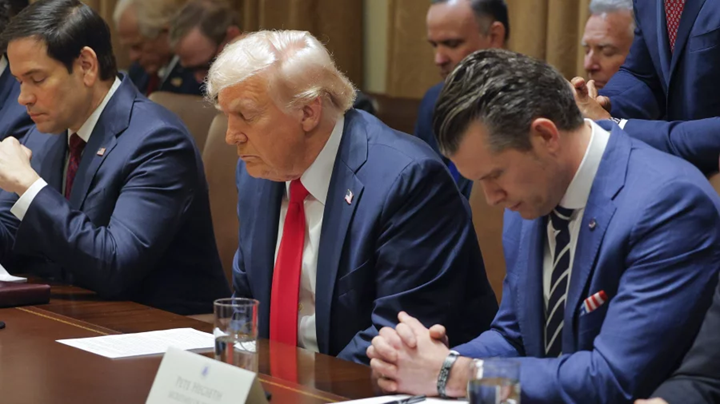
American presidents have long turned to Scripture as a rhetorical tool — a way to frame moments of national crisis, collective grief, or moral purpose. But a growing number of scholars and theologians are raising serious questions about how the current Trump administration is deploying biblical language, not simply for comfort or inspiration, but to publicly justify controversial immigration enforcement actions and military operations abroad.
Here is a closer look at what is happening, what the passages actually mean in their original context, and why it matters.
A Long Tradition of Presidential Scripture
The use of the Bible in presidential rhetoric is nothing new.
Following the September 11 terrorist attacks in 2001, President George W. Bush addressed a grieving nation and drew from Psalm 23, saying:
“Even though I walk through the valley of the shadow of death, I fear no evil, for you are with me.”
In 2012, President Barack Obama spoke at an interfaith prayer vigil following the Sandy Hook Elementary School shooting and quoted from 2 Corinthians 4:16:
“Do not lose heart. Though outwardly we are wasting away, inwardly we are being renewed day by day.”
In both cases, Scripture was used to offer comfort, solidarity, and hope to a mourning public — drawing on the emotional and spiritual weight of ancient texts to speak to universal human suffering.
A Different Kind of Biblical Rhetoric
The Trump administration, scholars say, has taken a markedly different approach — using Scripture not to console, but to sanction and legitimize state power.
On January 13, the Department of Homeland Security posted a video on social media timed to coincide with massive immigration enforcement raids taking place in Minnesota. Set to Lorde’s haunting cover of “Everybody Wants to Rule the World,” the video featured night-vision footage of military-style helicopters, camouflage-clad agents kicking in doors, and agents storming buildings.
Overlaid on this imagery were words pulled directly from Jesus’ Sermon on the Mount in the Gospel of Matthew:
“Blessed are the peacemakers, for they shall be called the sons of God.” — Matthew 5:9
Dyron Daughrity, a minister in the evangelical Church of Christ and Dean of Religion and Philosophy at Pepperdine University, offered this reaction:
“My first thought was there is a gun called the Peacemaker. It’s sort of this idea — peace through strength. It’s very common for armies, militaries throughout history to invoke the name of God, to invoke the name of Jesus Christ.”
Yii-Jan Lin, who teaches New Testament at Yale Divinity School, was more pointed in her analysis:
“DHS is causing surprise for a certain reason — to make a statement that whatever Homeland Security is doing is to create peace, even if it looks violent.”
Obery Hendricks, an elder in the African Methodist Episcopal Church and professor at Columbia University, put it bluntly:
“They’ve mistaken Caesar for Christ. Use that song, ‘Everybody Wants to Rule the World.’ What they’re saying is — yes, we are building an empire.”
Isaiah Invoked Over Immigration Footage
In a separate social media post, Homeland Security used the song “Jesus Walks” by Ye as a backdrop to more immigration enforcement footage. Above the post appeared a quote from the prophet Isaiah:
“I will uphold thee with the right hand of my righteousness.” — Isaiah 41:10
The choice is striking from a biblical studies perspective. Isaiah 41 is part of a larger passage sometimes called the “Servant Songs,” in which God speaks words of comfort and reassurance to Israel during a time of exile and vulnerability — language directed at the oppressed, not the powerful. Using it to frame a government enforcement action inverts the original power dynamic of the text in a significant way.
Pete Hegseth and the “Warrior” Theology
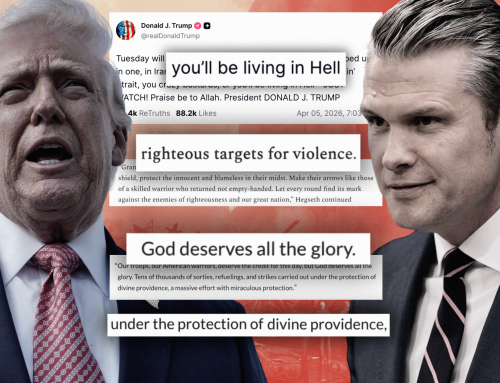
Secretary of Defense Pete Hegseth has emerged as perhaps the most vocal biblical voice within the administration. At the National Prayer Breakfast on February 5, Hegseth read from the Gospel of Mark and then delivered what he framed as a brief sermon:
“The warrior is willing to lay down his life for his unit, his country, and his creator. That warrior finds eternal life.”
He also quoted Psalm 144:1 at a Pentagon prayer service:
“Blessed be the Lord, my rock, who trains my hands for war and my fingers for battle.”
Yale’s Yii-Jan Lin sees a fundamental misreading of the Gospel text at work:
“What Hegseth is cleverly doing is calling to arms — to be warriors, to pick up a sword in a type of glorious martyrdom. But he’s missing the power dynamic here, which is that Jesus is not doing that for the cause of empire or whoever is in government over him, but actually against.”
Daughrity, however, sees Hegseth’s open religiosity as a positive development for evangelical Christians:
“Where a politician probably wouldn’t have talked like that 30 years ago, now they’re just openly embracing their religiosity. To compete in this world, we have to defend our faith and we have to be evangelistic.”
The Deeper Concern: Ideology vs. Faith
At the heart of this debate is a question that biblical scholars and theologians have wrestled with for centuries — who gets to interpret Scripture, and in whose interest?
Columbia University’s Obery Hendricks draws a sharp distinction between two very different approaches to the Bible:
“We’re talking about ideological Christianity versus Christianity of faith. Ideological Christianity is an ideology that refracts everything in the Bible through the prism of the interest of the one who’s interpreting it.”
In a Christianity of faith, Hendricks argues, the Bible does not bless any single political agenda — it critiques every political position, holding all human power accountable to a higher standard.
Meanwhile, Yale’s Lin raises a constitutional concern that cuts across religious lines entirely:
“There are many different sacred texts that could be used — and also just ethics of what do we think as a people and how do we want to operate as a government that doesn’t have to subscribe to any one religion at all?”
Where the Public Stands
Americans remain divided on the role of Scripture in public policy. According to a recent Pew Research Center survey:
- 51% say the Bible should have some or a great deal of influence on government policy
- 48% say it should have no influence
- 75% of Republicans say religion’s growing influence in American life is a good thing
- That figure is double the share of Democrats who feel the same way
Why This Matters for Biblical Studies
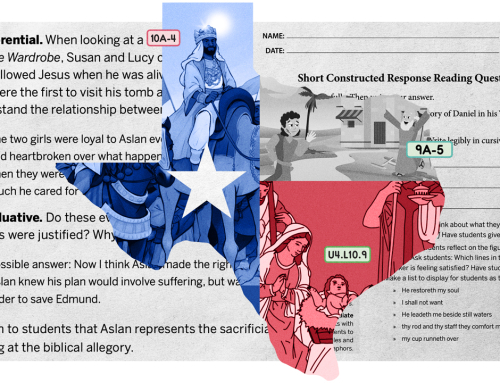
For students and scholars of Israelite history and the Hebrew Bible, the debate unfolding in American politics is a familiar one. Sacred texts have been used — and misused — by ruling powers throughout history to sanctify conquest, justify violence, and claim divine mandate.
The passages being invoked — from the Psalms of David, the Sermon on the Mount, the Book of Isaiah, and the Gospel of Mark — each carry rich, layered historical contexts rooted in the experiences of the ancient Israelite people. Understanding those original contexts is essential to evaluating how faithfully — or unfaithfully — they are being applied today.
As scholars like Lin and Hendricks remind us, the Bible has historically been the language of the oppressed calling out to God — not a press release issued by the powerful to explain their actions.
Original Source – How the Trump administration uses the Bible to justify its actions : Consider This from NPR : NPR